Your crypto's background check

Run AML screening on any wallet or transaction to detect risk, fraud, and blacklist exposure before you transact.

How to use AML Verifier

AML Check explanation

Why check your crypto wallet for AML risks?

Identify suspicious activity before it impacts your account or reputation.

Avoid Freezes

Regular AML checks reduce the risk of wallet blocks by exchanges.

Protect Reputation

Stay clear of flagged funds and keep your identity clean.

Earn Trust

AML reports show transparency to investors and partners.

Stay Compliant

Meet AML requirements for business and international use.

What You Get

Our Services

Detailed risk screening for crypto wallets and transactions — powered by AML data, blockchain forensics, and sanction lists.

Wallet Check

Full wallet activity analysis across supported blockchains

Detection of suspicious or unusual transaction patterns

Flags for links to sanctioned individuals or entities

Risk score with clear breakdown by threat level

Darknet and scam-related exposure indicators

Choose your check pack

Clear, Flat Pricing. No Surprises.

Pay only for what you need — $3 per check, no subscriptions, no hidden fees.

Add Checks

1 Check
$3
3 Checks
$9
5 Checks
POPULAR
$15
10 Checks
$30
20 Checks
$60
30 Checks
$90
50 Checks
$150

Pay with USDT, Bitcoin, Ethereum and more

Refer & get rewarded

Invite friends. Get free checks.

Share AML Verifier and earn 1 free check (worth $3) for every user who joins and makes a purchase using your referral link.

aml-verifier.com/ref=yourusername
Crazy Fox
Crazy Fox
Joined
+1 Check
Crazy Fox
Crazy Fox
Joined
+1 Check
Crazy Fox
Crazy Fox
Joined
+1 Check

TELEGRAM MINI APP

Run AML checks right inside Telegram

No install, no sign-up friction. Open our Mini App in one tap and verify wallets or transactions without leaving your chat.
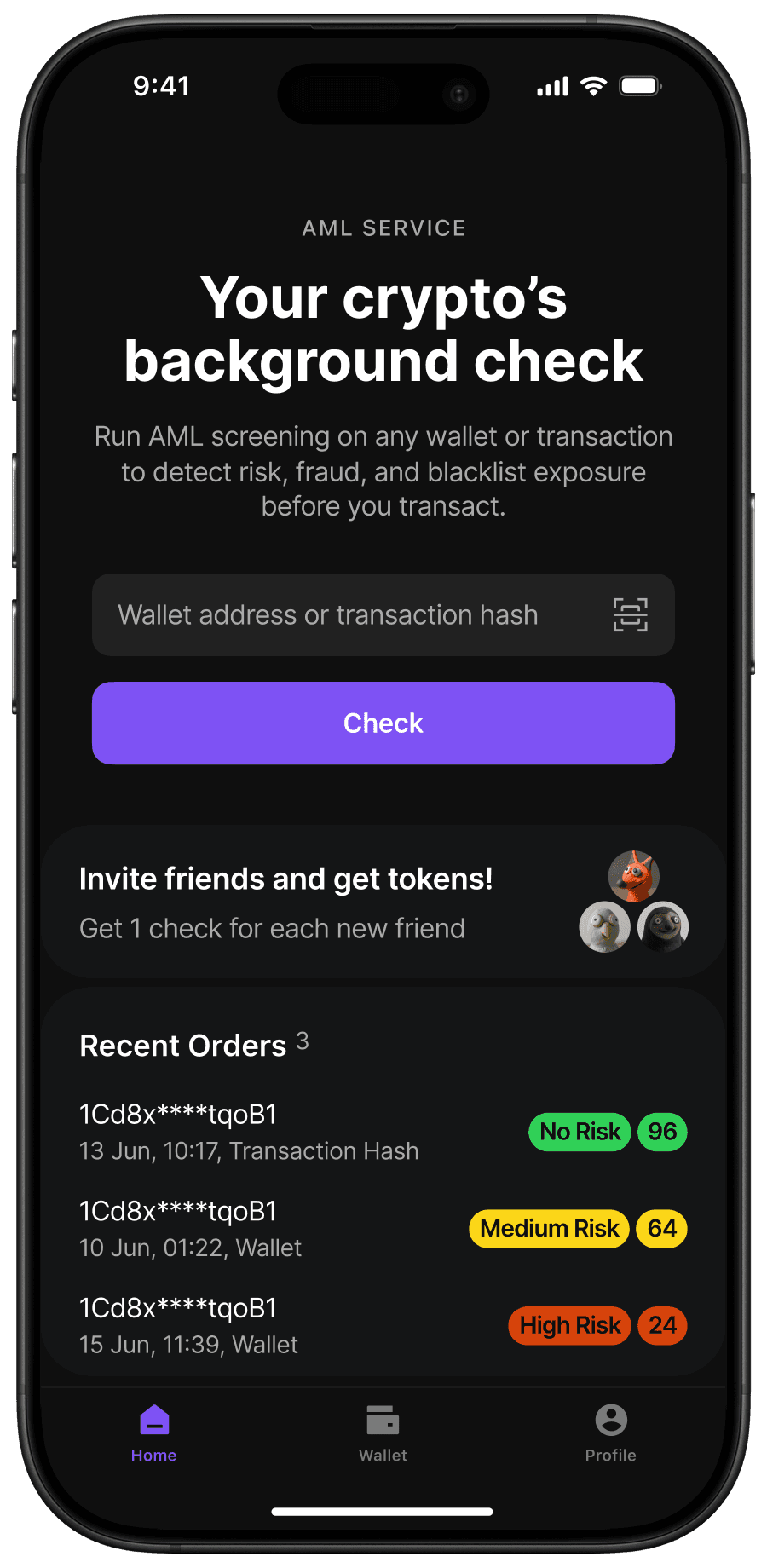
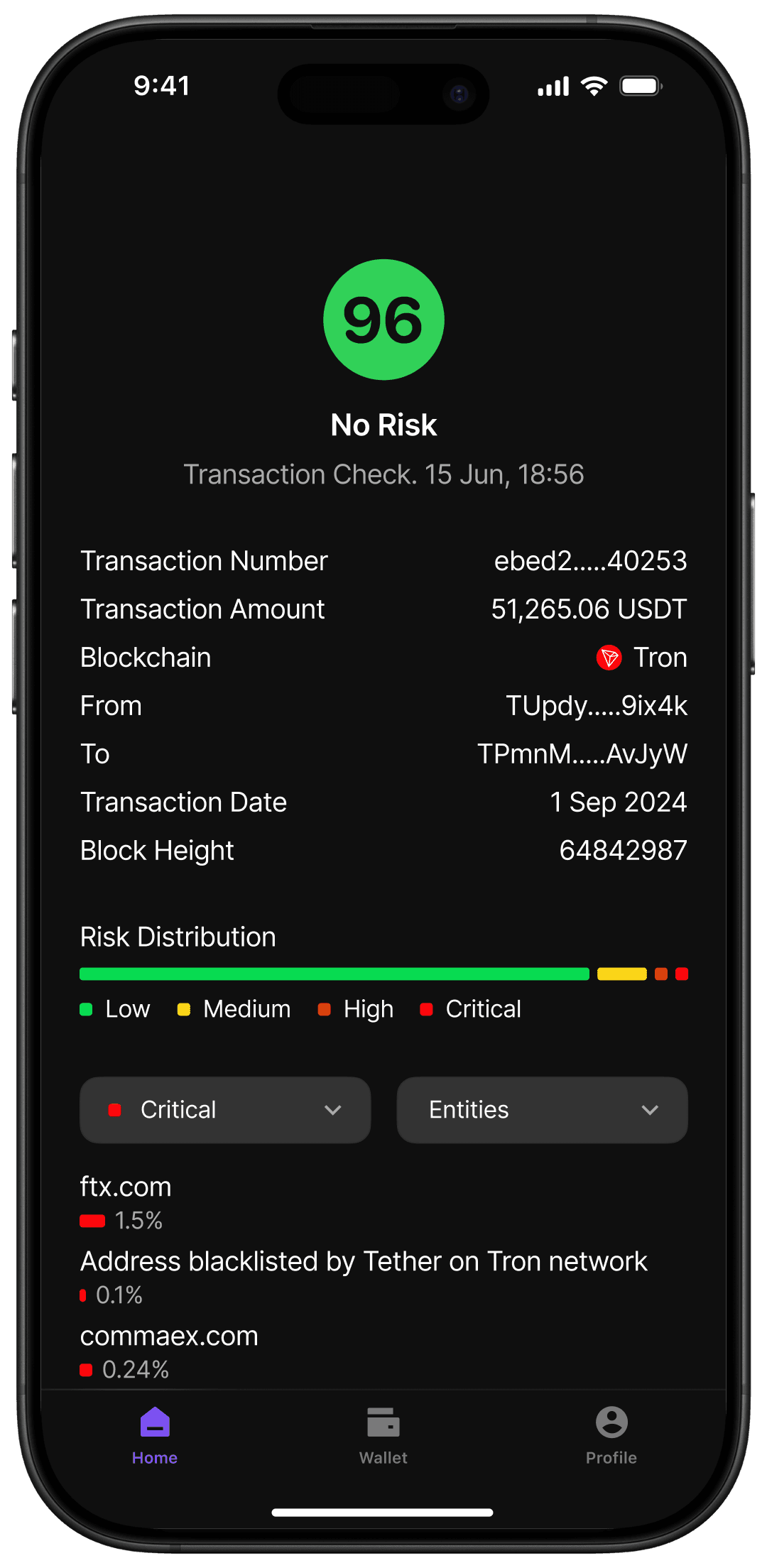
What you get in the Mini App

One-tap access from any Telegram chat — no downloads

Full AML checks with the accuracy of our web platform

Share results with colleagues or clients in seconds

AML Verifier Telegram Mini App preview on iPhone

JOIN AS AN AFFILIATE

Earn up to 30% by promoting AML Verifier

Join our affiliate program and get paid for every customer you bring in. Perfect for creators, communities, and crypto marketers.

Up to 30% commission

45-day referral tracking

Payouts in crypto

Live performance dashboard

How it works

1
Sign up— fast approval
2
Share your link— anywhere: site, socials, newsletter
3
Get paid— for every customer you refer
Blog

Latest Articles

Stay updated with the latest in crypto security.

Operationalizing Blockchain Analytics in Financial Institutions
FEATUREDMay 21, 2026

Operationalizing Blockchain Analytics in Financial Institutions

In the rapidly evolving world of finance, integrating blockchain analytics into your compliance framework is vital. This process ensures that your organization can effectively respond to on-chain risk signals and make informed compliance decisions. Here are key steps to operationalize blockchain analytics: 1. Align Teams Across Departments: To effectively utilize blockchain analytics, it is essential to ensure that compliance, IT, and risk management teams work collaboratively. This alignment fosters a culture of shared responsibility for compliance and risk assessment, enabling a more holistic approach to analyzing blockchain data. 2. Invest in the Right Technology: Implementing advanced blockchain analytics tools is crucial. These tools should provide comprehensive insights into transaction histories, wallet behaviors, and risk indicators. Investing in robust technology helps streamline the compliance process and enhances the accuracy of risk assessments. 3. Establish Clear Processes: Define standardized procedures for analyzing blockchain data. This includes developing protocols for how to respond to alerts generated by analytics tools. Clear processes help ensure that compliance decisions are consistent and defensible, reducing the risk of regulatory penalties. 4. Continuous Training and Development: Regular training sessions for staff on the latest blockchain trends and compliance requirements are essential. This ongoing education helps maintain a knowledgeable workforce capable of effectively interpreting blockchain analytics and adapting to new regulatory environments. 5. Monitor and Evaluate: Regularly assess the effectiveness of your blockchain analytics strategy. This includes tracking compliance outcomes and refining processes based on feedback and evolving regulations. Continuous evaluation ensures that your compliance framework remains robust and responsive to new challenges. In summary, operationalizing blockchain analytics involves aligning people, technology, and processes to ensure effective compliance. By following these steps, financial institutions can better navigate the complexities of blockchain transactions. For organizations looking to enhance their compliance processes, AML Verifier offers a reliable wallet-screening tool that integrates seamlessly with your existing systems.

May 20, 2026

Preparing Your AML Framework for the FCA's Crypto Regime

As the UK's new cryptoasset regime approaches, compliance officers must ensure their Anti-Money Laundering (AML) frameworks are robust and ready for the upcoming changes. Here are several key considerations to prepare for the Financial Conduct Authority's (FCA) new regulations. 1. Understand the Regulatory Timeline The FCA has outlined a clear timeline for the new cryptoasset regime, with the authorization window opening on September 30, 2026, and the regime officially commencing on October 25, 2027. Compliance officers should prioritize understanding this timeline to align their AML strategies accordingly and avoid last-minute adjustments. 2. Review the Regulatory Perimeter The FCA’s CP26/13 provides essential guidance on how the regulatory perimeter will be applied to cryptoassets. Compliance officers should carefully review this document to identify which assets fall under the new regulations and ensure their AML policies cover all relevant areas, minimizing the risk of non-compliance. 3. Enhance Customer Due Diligence (CDD) Procedures With new regulations come heightened expectations for customer due diligence. Compliance officers must refine their CDD processes to ensure they can effectively assess and mitigate risks associated with crypto transactions. This includes verifying the identity of customers and understanding their transaction behaviors. 4. Implement Robust Transaction Monitoring Systems To comply with the new regime, it is crucial to have effective transaction monitoring systems in place. These systems should be capable of flagging suspicious activities and ensuring that all transactions comply with AML requirements. Regularly updating these systems will help maintain compliance as regulations evolve. 5. Train Staff on New Regulations Ensuring that all employees are well-informed about the new regulations is vital for compliance. Conducting training sessions focused on the FCA’s guidelines and AML best practices will empower staff to recognize and respond appropriately to potential compliance issues. In summary, preparing your AML framework for the FCA's new cryptoasset regime is essential for compliance officers to navigate the upcoming regulatory landscape successfully. To ensure your organization is ready for these changes, consider using AML Verifier as your go-to wallet-screening tool. Our platform helps you streamline compliance processes and enhance your AML measures, ensuring that your framework is robust and ready for the future.

Future Trends in Blockchain Analytics for Regulatory Compliance
Apr 28, 2026

Future Trends in Blockchain Analytics for Regulatory Compliance

As the landscape of cryptocurrency continues to evolve, compliance officers must stay ahead of the regulatory curve. The anticipated changes in 2026 will demand innovative approaches to blockchain analytics. Here are key trends to watch: 1. Increased Regulatory Scrutiny: Expect more stringent regulations across jurisdictions. Governments are likely to enhance their focus on compliance, necessitating robust analytics tools to ensure adherence to laws. Organizations should prepare for more frequent audits and the need for comprehensive reporting. 2. Advancements in Blockchain Analytics Tools: The next generation of analytics tools will leverage artificial intelligence and machine learning to provide deeper insights. These technologies will help compliance officers detect suspicious activities more efficiently, allowing for timely interventions and better risk management. 3. Integration with Traditional Financial Systems: As cryptocurrencies become more mainstream, there will be a push for better integration between crypto and traditional finance. Compliance officers will need tools that can seamlessly analyze transactions across both domains, ensuring a holistic view of financial activities. 4. Focus on Privacy and Data Protection: With the rise of privacy coins and technologies, compliance will require a delicate balance between monitoring transactions and respecting user privacy. Regulatory frameworks will evolve to address these concerns, making it essential for compliance officers to stay informed about best practices in data protection. 5. Collaboration with Law Enforcement: Increased collaboration between the crypto industry and law enforcement agencies is expected. This partnership will enhance the effectiveness of compliance measures and improve the overall security of the crypto ecosystem. Compliance officers should foster relationships with relevant authorities to facilitate this cooperation. In conclusion, the regulatory landscape for blockchain analytics is set to transform dramatically by 2026. Staying informed and adapting to these changes will be crucial for compliance officers. For those looking to enhance their compliance efforts, AML Verifier offers a comprehensive wallet-screening tool designed to help organizations navigate the complexities of cryptocurrency regulations.

Browse All Articles

Frequently asked questions

Find answers to common questions about our AML verification service.

AML Verifier supports address and transaction checks across popular blockchain networks, including major ecosystems, L2 networks, stablecoin networks, DeFi, and everyday crypto transfers. Supported networks: Arbitrum One, Avalanche, Base, Bitcoin, Bitcoin Cash, Blast, BNB Smart Chain, Cardano, Dash, Dogecoin, Ethereum, Ink, Litecoin, Mantle, Optimism, Polygon, Ripple, Solana, Stellar, Tezos, TON, TRON. We regularly expand our coverage so users can check crypto activity across the most in-demand networks.

Scan. Detect. Stay safe.

Check crypto wallets and transactions for risks — fast and easy.